
Special Tax Districts in Utah: What They Are, How They Work, and Where I Stand
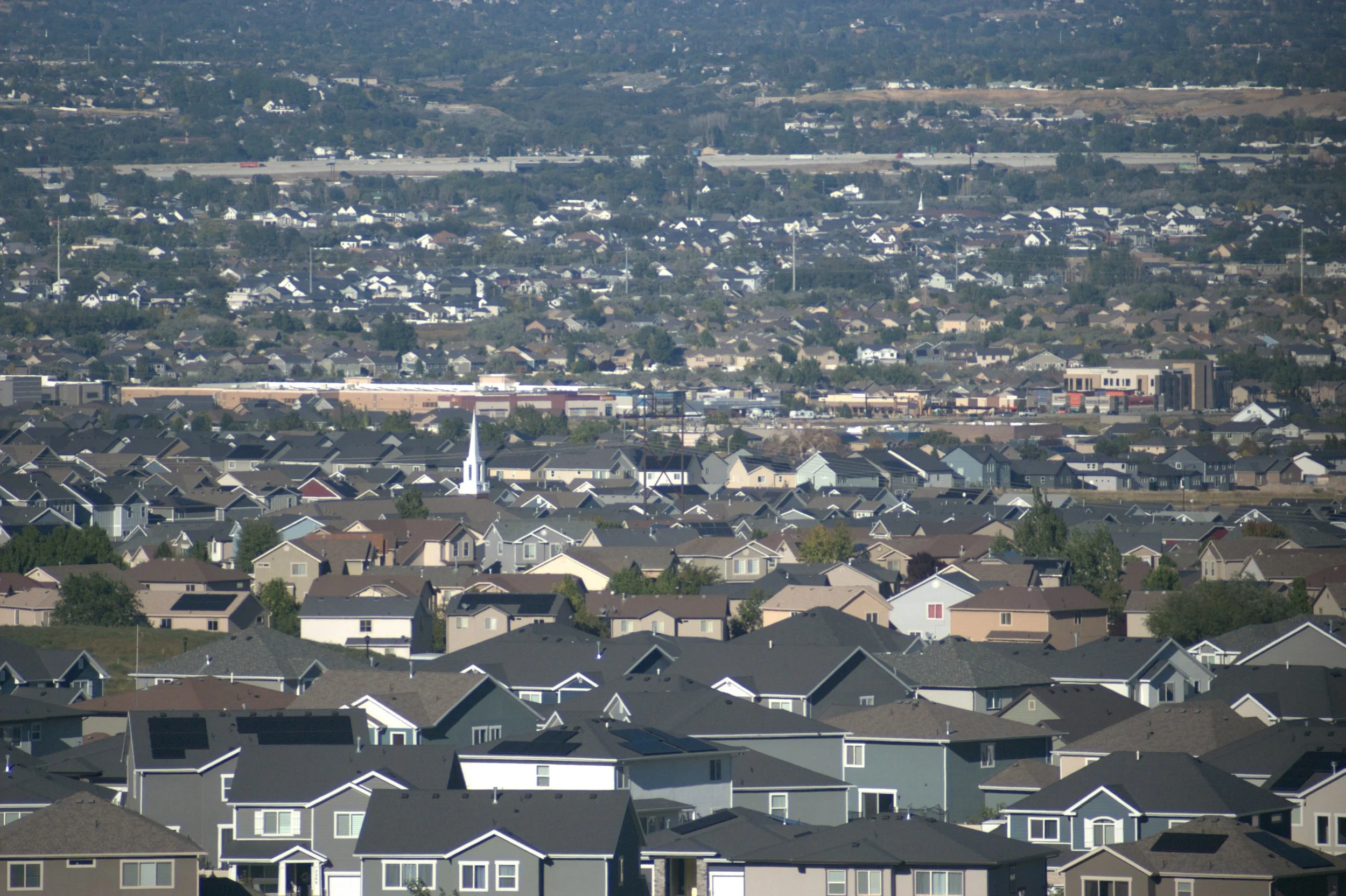
Linda and I have lived in this area long enough to remember when it felt different. The roads were quieter. You knew your neighbors. The fields between subdivisions were still fields. That was not so long ago.
District 52 has grown fast. It is still growing. It will keep growing. And I am not against that. Growth brings opportunity, energy, and the kind of community vitality that makes a place worth living in. But growth also brings pressure, and over the years I have watched that pressure produce some financing tools that I supported early on and have come to see differently since.
I was there. I watched how it played out. And I updated accordingly.
What We Are Talking About
Special tax districts are financing tools the Legislature created over the past several years, largely in response to Utah's housing and growth pressures. They go by acronyms most people have never encountered. Let me break them down plainly.
A Public Infrastructure District, or PID, is a special government entity created to finance the roads, water lines, sewer systems, and other public infrastructure a new development requires. Rather than those costs being carried upfront, a PID issues bonds to cover them. The people who buy property inside that district repay those bonds through a special tax assessment added to their property tax bill, often for 20 to 30 years. That assessment follows the property through every sale.
Think about what that means practically. A young family in Lehi saves up, finds a home they can afford, closes on it, and starts their life there. A year or two later they get their property tax bill and notice a line item they did not fully understand at closing. They are now paying for infrastructure decisions made before they arrived, and they will be paying for years after the developer who set up that district has long since moved on to the next project.
I want to be clear: the developers and property owners using these tools are doing exactly what the law allows. They are responding to real infrastructure costs and real development pressures, and those costs are genuine. My concern is not with them. My concern is with a financing structure that moves those costs off the front page and onto a tax bill that shows up later, sometimes much later, in someone's life.
Tax Increment Financing, or TIF, works differently. It freezes the property tax base of a defined area at its current assessed value. As development occurs and property values rise, the additional tax revenue generated above that frozen baseline gets captured and redirected back into the development district, rather than flowing to the schools, counties, and cities that would otherwise receive it. Every dollar captured through TIF is a dollar that does not reach a classroom or a road crew.
A Housing and Transit Reinvestment Zone, or HTRZ, is a TIF district built around a specific state policy goal: high-density, mixed-use development near transit corridors. Think FrontRunner stations and bus rapid transit lines. The state can capture up to 80 percent of property tax increment from all affected taxing entities for up to 25 years to subsidize that development pattern.
Where They Exist
These are not abstract concepts. They are operating right now in communities Linda and I drive through every week.
In Lehi, there is an active HTRZ tied to the FrontRunner station near Thanksgiving Point. The proposal covers 53 acres in the heart of Silicon Slopes and calls for up to 2,000 residential units, with a financing gap projected in the hundreds of millions of dollars to be filled through public tax increment. Residents have raised real questions about traffic, density, and whether this reflects what the community actually wants for that area. Those are the right questions to be asking. The fact that they are hard to get answered says something about how these tools work in practice.
In Salt Lake City, the scale is considerably larger. A Convention Center Reinvestment Zone around the Salt Palace and Delta Center captures 100 percent of property tax increment within its boundaries for 30 years, on top of a dedicated half-percent sales tax increase, totaling approximately $1.8 billion in public financing directed toward renovating the Delta Center and rebuilding the Salt Palace. On the city's west side, the Larry H. Miller Company's Power District has $900 million in public financing authorized through a car rental tax and property tax increment, aimed at attracting a potential Major League Baseball franchise. The financing structures are already collecting revenue. There is no team yet.
Why I Voted for Some of These Bills
Utah has a real housing challenge. Families across District 52 know the pressure of rising home prices and strained infrastructure. When these bills came before the Legislature, they were presented as tools for cities to address a genuine problem. I believed local governments needed options. I voted to give them some.
I also voted for HB 507 this past session. Parts of that bill were genuinely worth supporting. It now requires that sellers of homes inside a PID disclose the expected annual cost of the assessment at closing. That young family I mentioned deserves to know what they are walking into before they sign. HB 507 also set a sunset on HTRZs, prohibiting new ones from being created after January 1, 2028. That too was worth supporting.
But I have to be honest about what else the bill does. It creates a replacement framework called Regionally Significant Development Zones that preserves most of the same increment capture mechanics under a new name. The state does not step back. It reorganizes. And the pressure on local governments to execute state-approved development plans remains. In Lehi right now, a city council that wants to move more carefully faces reporting requirements to a state committee if it does not proceed, with the implicit threat of heavier state involvement if it resists. That is not local control. That is state-directed development with local governments serving as the administrative layer.
What Healthy Housing Actually Looks Like
I want to step back from the policy for a moment, because there is a bigger point here.
I fly fish when I get the chance. A while back my guide stopped me when I was too focused on landing big Trout and frustrated with the smaller ones coming in. He said something I have thought about a lot since: be grateful for every size fish. That is the sign of a healthy fishery.
Housing works the same way. A healthy housing market has all sizes. Starter condos and high-density units near employment centers. Mid-sized homes for growing families. Larger homes on larger lots for those who want them and can afford them. Everything the market, responding to what people actually need and want, determines a community needs.
Linda and I have watched District 52 grow through all of those phases. We have seen new subdivisions open up and fill fast. We have watched traffic patterns change and schools fill and the character of neighborhoods shift. Some of that change is wonderful. Some of it has happened faster than the community could absorb. And in some cases the financing structures driving that growth have not been as transparent or as accountable as the people living with the results deserve.
My concern with these tools is that they tend to push hard in one direction. High density. Transit-oriented. On terms set by a state committee far from the neighborhoods being shaped. That does not produce a healthy fishery. It produces one size of Trot and calls it a solution.
Real housing health comes from a market that responds to what people actually want, supported by infrastructure costs that new development funds as it goes, and a regulatory environment that does not artificially inflate the cost of building anything at all.
Where I Stand Now
I have seen enough. These tools have not delivered what was promised. They shift infrastructure costs in ways that are not always transparent to the families absorbing them. They divert tax revenue away from schools and local services for a generation. And in too many cases, the state ends up in the driver's seat on decisions that should belong to the people closest to them.
My position is straightforward. Local governments should have the authority to decide whether any of these tools make sense for their specific situation, with genuine transparency and real community input. The state's role should be accountability and oversight, not mandate and pressure. And when a city council says it wants to slow down and take a harder look, the state should not be hovering over it with a reporting requirement and the threat of a special session.
Growth has already come to District 52. It is still here. It will keep coming. The question has never been whether to grow. The question is whether growth happens on terms that serve the people who live here, or on terms designed somewhere else by people who will not share the consequences.
I know which one Linda and I are going to keep fighting for.
Rep. Cory Maloy | Utah House District 52 | 801-477-0019 | cory@corymaloy.com | corymaloy.com
© 2015-2026 Albert Cory Maloy. All rights reserved. Cory Maloy™ and the Cory Maloy campaign logo are trademarks of Albert Cory Maloy. Paid for by the Campaign to Elect Cory Maloy