Utah Legislature 2026: Why I Reject the "Start at No" Philosophy
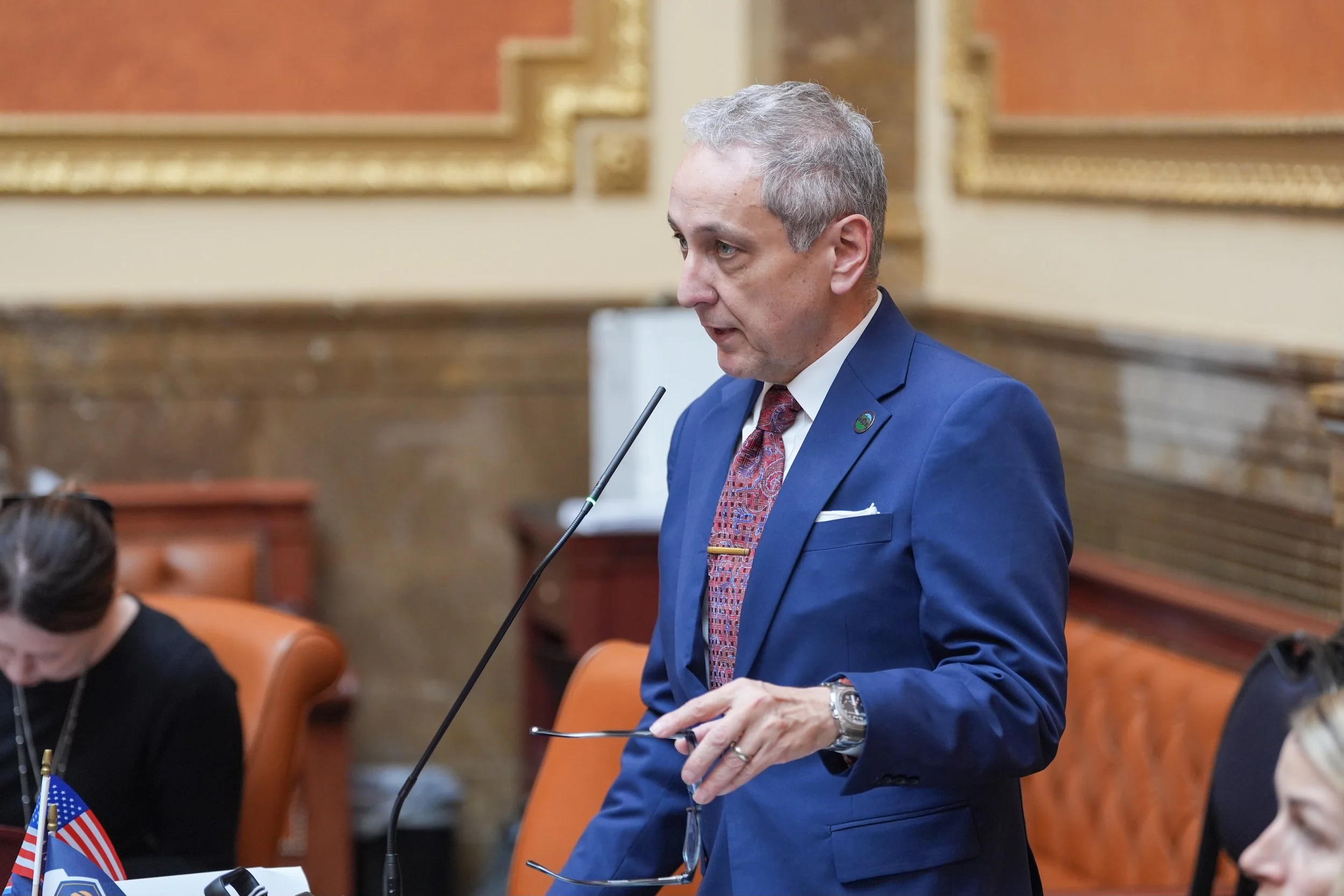
Representative Cory Maloy™ presenting a bill in the Utah House Chamber.
The “Default No” Argument Is Wrong. And the Constitutional Case for It Doesn’t Hold Up.
There’s a message going around from some in our local party that Utah legislators should approach every bill with a default of “no.” That we vote yes on too many things. That skepticism should be our starting posture, and that a good conservative Utah Republican legislator is the hardest one to convince.
This position now appears formally in the Utah County Republican Party Platform, under a section titled “Elected Officials’ Responsibilities.” I’ve read it. I understand where it comes from. And I think it’s wrong.
Here’s Where I Stand
Every bill at the Utah State Capitol was written by a real person. A fellow legislator who went back to their district, heard from their neighbors, identified a problem, and tried to do something about it. My job when I see that bill isn’t to walk in the door already looking for reasons to say no. My job is to engage seriously, ask hard questions, help make it better if I can, and then decide.
Starting at “no” doesn’t make you more conservative. It makes you less useful.
A Fair Point, Addressed Separately
There is a legitimate conversation happening about whether Utah legislators introduce too many bills in the first place. Honestly, that’s probably true. Many of us in the Utah House are working to be more intentional going forward, focusing on genuine need rather than volume. That’s a conversation worth having.
But that is a completely different conversation. Being more selective about what we introduce is discipline. Walking into your colleagues’ bills with your arms already crossed before you’ve heard a word is something else entirely. One is discipline. The other is theater.
Utah has earned a national reputation as one of the best-governed states in the country. That didn’t happen because Utah House Representatives defaulted to “no.” It happened because people showed up, engaged honestly, and solved real problems for real Utahns. That’s the standard I’m holding myself to.
Not Every Bill Should Pass. And That’s Fine
To be clear: I don’t think every bill that comes before the Utah Legislature should pass. Not even close. And they don’t. Every bill goes through multiple committee hearings, fiscal review, public comment, floor debate, and votes in both chambers before it ever reaches the Governor’s desk. The process exists to filter out bad ideas. It does its job.
When a bill fails, there are usually very real reasons why. Budget concerns, unresolved policy questions, timing, or it simply needs more work. That’s not a failure of the system. That’s the Utah legislative process working exactly as it should.
There is a meaningful difference between a bill failing because it didn’t hold up to honest scrutiny, and a legislator who walked in pre-decided before they even heard the argument. One is principled. The other is just obstruction dressed up as principle.
Who I’m Accountable To
Party organizations do important work. They support candidates, organize volunteers, and engage voters. I value all of that.
When someone in a party leadership position suggests that Utah legislators who work constructively to pass good bills are doing something wrong, they’re misunderstanding what this job is, and they’re misunderstanding their own role too. Party chairs don’t write legislation, sit in committee at 8 in the morning or late into the night, cast votes on the Utah House floor, or answer to the people of District 52. I do. I welcome that accountability completely.
Judge me on whether I’m working hard, engaging honestly, and representing this district faithfully. That’s the right standard. The standard is not whether I’ve made it the hardest to say yes.
One More Thing: The Utah Constitution Doesn’t Say What They Claim It Says
The Utah County Republican Party Platform section I’m referencing closes with a citation: “(Utah Constitution: Article VI, Section 22, Article VIII, Section 2).” Those are offered as the constitutional foundation for everything in that section, including the “default no” position. So let’s look at what those sections actually say.
Article VI, Section 22is a procedural rule governing how bills move through the Legislature. It requires bills to be read by title three times in each chamber, that each bill contain only one subject clearly expressed in its title, and that final passage be recorded by yeas and nays. The single-subject requirement is a real constitutional provision, and it’s fair to cite it in that narrow context. But nothing in that section establishes a default voting posture, defines a legislator’s personal responsibilities, or supports the broader claims in the platform language.
Article VIII, Section 2is about the Utah Supreme Court. It establishes the Court as the highest court in the state, addresses the role of the Chief Justice, and sets the standard for when the Court can declare a law unconstitutional. It has nothing to do with legislators. Not a single word of it applies.
The platform language may reflect sincerely held views about how legislators should behave. That’s a legitimate debate to have. But citing constitutional provisions that don’t support the claims being made, in a document aimed at influencing how delegates evaluate their legislators, is not a fair representation of what the Utah Constitution actually says. Delegates deserve to know that when they read it.
Thanks for reading. And thanks for trusting me to be your voice at the Utah State Capitol. -- Cory
Representative Cory Maloy | Utah House District 52 | Utah State Legislature
© 2015–2026 Albert Cory Maloy. All rights reserved. Cory Maloy™ and the Cory Maloy campaign logo are trademarks of Albert Cory Maloy.