Utah’s Caucus-Convention System 2026: This Is How a Republic Is Supposed to Work
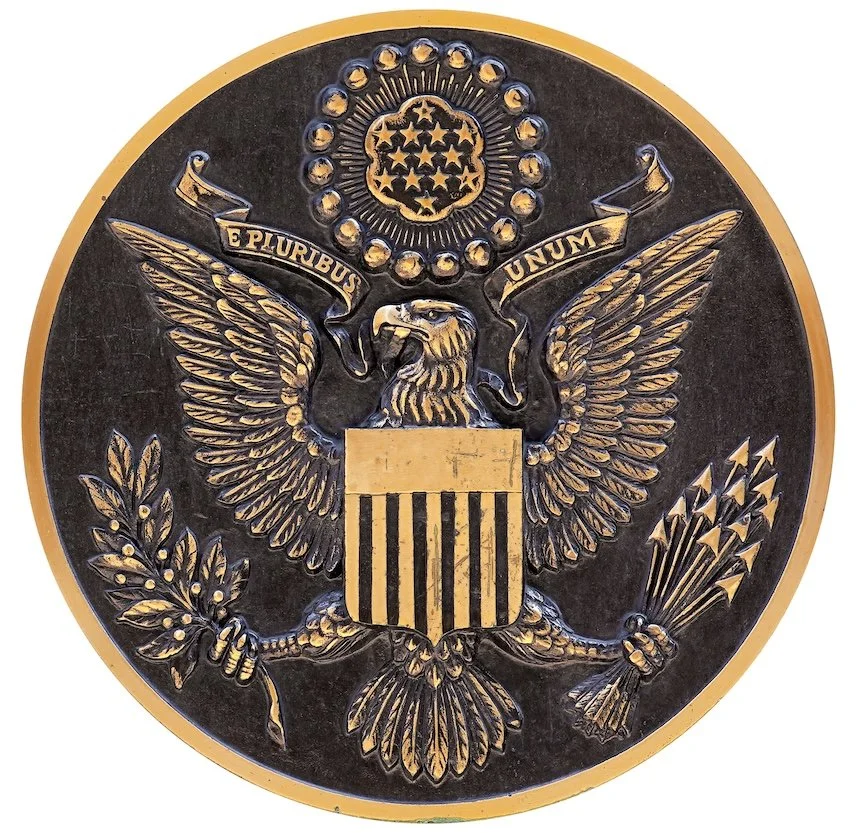
The Great Seal of the United States, adopted 1782. On July 4, 1776, Franklin, Adams, and Jefferson proposed ancient Israel for this seal — the same day they declared independence.**
This Tuesday night, neighbors across Utah walk into school gymnasiums and community rooms, choose delegates from among themselves, and send those people to represent their precinct at the Republican County and State Conventions. No ad agency picks those delegates. No party boss assigns them. People on your street, chosen by people on your street.
That is Utah’s caucus-convention system. And as your representative, I want to tell you plainly: I believe it is the most correct way free people have ever devised to choose their leaders. Not just for Utah. For a republic. And I mean that word specifically, because it matters more than most people realize.
I also believe it because history backs it up. An ancestor of mine, W. Cleon Skousen, spent his life studying how free people govern themselves. His book The 5000 Year Leap* is one I recommend without reservation. It draws its share of debate, as good books tend to, but the core of what Skousen identified is something I find compelling every time I look at it. He traced the same pattern of self-governance across ancient Israel, Anglo-Saxon England, and colonial America. Free people organized authority the same way, every time: they started with the family, chose a representative from the neighborhood, sent that person to speak for the community, and built upward from there. Power flowing up from the people. Never down from the state. That is not just a theory. That is what will happen Tuesday night in your precinct.
We Are a Republic. Most People Have That Wrong.
I will be direct. We are not a democracy. We are a republic. That is not a footnote in a civics textbook. It is the foundation of everything we are doing Tuesday night.
A pure democracy means whoever stirs up the most emotion on any given day can carry the vote. Passion beats principle every time, and the Founders knew exactly where that leads. The Founders studied enough history to know exactly where that leads, and they rejected it on purpose. They gave us something better.
In a republic, citizens choose trusted representatives to study the issues, deliberate carefully, and vote on their behalf. Those representatives then answer to the people who sent them. Trust and accountability, running in both directions. The caucus-convention system is that design working at its most local and most honest level.
It is also how I serve in the Utah House. The people of District 52 do not vote on every bill that comes before me. They trust me to understand the issues, weigh the consequences, and hold firm on their values. When I do that well, I earn the right to continue. When I fall short, they have every right to send someone else. That accountability is not a constraint on my service. It is the purpose of it.
This Pattern Is Older Than America.
In Exodus 18 (Exodus 18:17-26 KJV), Jethro counseled Moses to stop governing alone and organize authority in tiers, with leaders of tens, fifties, hundreds, and thousands, so that governance started with the people and moved upward. The Anglo-Saxons governed through community assemblies where authority rested with the people, not a distant crown. Colonial New England ran on the town meeting. The Constitutional Convention itself was a gathering of trusted representatives chosen by their states to deliberate for everyone back home.
Jefferson, Adams, and Franklin, the three men assigned to design the Great Seal of the United States**, wanted to put both ancient Israel and the Anglo-Saxons on that seal. They understood they were not building something new. They were restoring something ancient and proven.
Skousen saw that thread running through all of it. So do I. And when I watch delegates get chosen at caucus night, I see the same thing free people figured out across centuries: the closer governance stays to the people, the better it works.
Proximity Makes This System Honest.
The further government gets from the people, the less accountable it becomes. I have seen that firsthand in the Legislature, and I see it even more clearly at the federal level. Distance breeds disconnection. Disconnection breeds arrogance.
The caucus-convention system keeps candidate selection where it belongs. County delegates go to the Utah County Republican Convention, where candidates for seats like House District 52 in the Utah House are nominated. State delegates go to the State Convention, where candidates for statewide offices such as State Senators, Governor, Attorney General, Treasurer, Auditor, and Federal offices, are considered. Every one of those delegates starts Tuesday night, chosen by the people on their own block.
A delegate who lives three doors down from you has to look you in the eye. They can be asked directly how they voted at convention and why. There is no hiding behind a spokesperson. That accountability is immediate, personal, and exactly what a republic needs to stay healthy.
Convention delegates are not reacting to the last mailer they received. They have real conversations. They meet candidates in person. They bring genuine judgment to their vote, not just a reaction to a thirty-second ad. That is the kind of citizenship this system is built to produce.
Benjamin Franklin walked out of the Constitutional Convention and someone asked him what kind of government they had created. He famously said, “A republic, if you can keep it.”
Keeping it starts Tuesday. In your precinct. With your neighbors.
Get There Tuesday. Then Come See Me Friday.
Show up to your caucus Tuesday night. If you are elected as a delegate, I want to see you in person on Friday, March 20, at the Lehi Power Department, 560 West Glen Carter Drive, Lehi, at 6:30 PM for a new delegate town hall meeting. We will talk about where I stand, what is at stake for District 52, and I want to hear from you directly. That is the conversation this process is built to make possible.
This is neighbors choosing neighbors. Communities sending trusted voices upward. Authority flowing from the family to the precinct to the convention, not handed down from party headquarters or bought with a media budget.
That is a republic. That is Utah. That is how I govern, and it is how we should always choose the people who govern us.
I will see you Tuesday, and I hope Friday too.
Rep. Cory Maloy
Utah House District 52
(801) 477-0019 | cory@corymaloy.com | corymaloy.com
*Further Reading
Skousen, W. Cleon. The 5000 Year Leap: A Miracle That Changed the World. National Center for Constitutional Studies, 1981. The historical framework referenced in this post, including the governing structures of ancient Israel, the Anglo-Saxon tradition of People’s Law, and their influence on the American Founding, draws on Skousen’s research in the introductory chapters and Part I of this work. Recommended reading for anyone who wants to understand the philosophical roots of representative self-governance.
**A Note on the Great Seal
The design Jefferson, Adams, and Franklin proposed for the Great Seal in 1776 was never adopted. Franklin proposed the front show Moses parting the Red Sea with the motto "Rebellion to Tyrants is Obedience to God." Jefferson proposed the back depict the Israelites being led through the wilderness by a pillar of fire. Congress went through three separate committees over six years before finally adopting the Great Seal in 1782, with the final design largely credited to Charles Thomson, Secretary of Congress, and heraldry expert William Barton. What endured was the eagle, the shield, the olive branch, the arrows, and E Pluribus Unum, “Out of many, one.” What the original committee's proposal reveals, however, is telling: on the very day they signed the Declaration of Independence, the men who founded this republic had ancient Israel on their minds as the model for what they were building.